
Gelco Chimney Sweep in East New York: A Homeowner’s Guide
When a technician installs a new cap or damper on your chimney, you’re usually standing on the ground with no way to tell whether that component is professional-grade or a hardware-store substitute. Brand recognition is one of the few honest ways to verify material quality without becoming a chimney expert yourself. Gelco is one of the most recognized names in professional chimney supply, and knowing what their products do, and where they show up in a real service, tells you a lot about the contractor holding the tools. If you’d rather not sort through materials on your own, call (855) 337-0826 and we’ll walk you through it.
What does Gelco actually make, and where does it show up on your chimney?
Gelco manufactures components for the top and inside of a chimney system: caps, dampers, and specialty parts that professional sweeps install every working day. You won’t see the name on a television ad. You’ll see it on the box a technician opens at your fireplace, which is exactly the point.
In a full chimney service in East New York, Gelco parts most often appear in three places:
- Caps. The lid on top of the flue. It keeps rain, snow, birds, and squirrels out while letting smoke escape. A correctly sized cap is a tight, purpose-built fit, not a screen clamped on with hope.
- Dampers. The door that controls draft and seals the flue when the fireplace is idle. A worn or ill-fitting damper wastes heat and lets cold air pour down the chimney all winter.
- Specialty components. Mounting hardware, adapters, and the small fittings that determine whether a cap or damper actually seals or just sits there looking official.
When we discuss a Chimney Sweep East New York visit with a homeowner, the conversation usually starts with sweeping and ends with components. That’s normal. A sweep tells you what’s inside the flue. The parts on top and at the firebox are what keep the system working between visits. Gelco products sit on both ends of that job.
Why should East New York homeowners ask which brands a contractor installs?
Because asking is the cheapest quality check available to you. When a contractor quotes a new cap or damper, ask plainly which brand and product they’re installing, then ask why they chose it. A professional answers immediately and can explain the fit and material. Hesitation, a vague “we use whatever’s in stock,” or a refusal to name anything is a red flag worth taking seriously.
Here’s a short set of questions that separates a specialist from a generalist:
- Which brand of cap and damper are you installing, and what gauge is the metal?
- How will you size the cap to my flue, and will you show me the measurement?
- Do you install HeatShield or DuraFlex systems if the flue needs restoration?
- Will the product specifications appear on the written quote?
Those last two matter. HeatShield is a liner resurfacing system, and DuraFlex is a flexible relining system. Both are restoration tools that sweep-only outfits don’t carry, so a contractor who can discuss them coherently understands the whole system, not just the brush. You’re not expected to know the answers. You’re expected to notice whether the answers come easily.
What’s the difference between professional-grade chimney components and builder-grade substitutes?
Material gauge, fit, and expected service life, in that order. A builder-grade cap is often thin steel with a loose universal fit. It installs quickly, looks fine for a season or two, and then rusts through or rattles loose at the first hard storm. Professional-grade components like those from Gelco are made to a heavier gauge with sizing that matches the flue rather than approximating it.
In an urban climate like Brooklyn’s, the wear comes from freeze-thaw cycles, driven rain, and the temperature swings that come with dense housing and open rooftops. Thin metal flexes in that cycle and starts failing at the seams. Heavier material holds its shape. A properly sized, professional-grade cap can reasonably be expected to last years longer than a builder-grade substitute, which is the real cost comparison, because you’re not paying for the part once, you’re paying for how often you replace it.
Famco and Olympia Chimney components are also part of that professional supply channel, and we specify them where the fit calls for it. The material grade is the difference between a component that’s still sealing in ten winters and one that’s on the roof as decoration.
Does installation quality matter as much as the component itself?
Yes, and in some cases more. A correctly installed undersized cap still fails early, because the wrong fit defeats good material. The cap has to clear the flue opening properly, the damper has to seat against a clean frame, and the mounting has to hold through wind load. Good components installed carelessly are just expensive parts that fail on schedule.
That’s why our approach is one call, full system. We inspect before we recommend. A sweep, an inspection, a cap, a crown, and any chimney repair all fall under the same contractor, so nothing gets handed to a second crew that never saw the inspection findings. In our experience, the failures we see in East New York most often trace back to a component chosen for the wrong flue or installed without measuring, not to the brand itself.
Whether the crown and cap are sealed properly also decides whether water gets into the masonry below. That’s why we treat a chimney cap & crown job as a system question, not a shopping question.
How can you cross-check product specs on a repair quote or service report?
Read the line items, not the summary. A quote that names a brand and a product should also list gauge, dimensions, and fit. If it says “cap installed” with no size and no brand, ask for the specification in writing before you approve anything.
A useful checklist for reviewing that paperwork:
- Does the quote name the brand and the specific component?
- Are the flue dimensions and the cap size stated?
- Is the material gauge listed, or can the contractor tell you when asked?
- Does the report show photos of the flue and the existing cap before replacement?
- Does the quote explain why the component is being replaced at all?
That last point is the one that separates diagnostics from upselling. Nothing should be recommended without evidence you can see for yourself, and a professional should be willing to tell you plainly when work can safely wait. A qualified chimney sweep visit in East New York should produce a report that answers those questions before you spend a cent on parts. Our technicians have up to 12 years of experience, and they’ll show you the photo before they recommend the replacement.
When should you call a professional instead of inspecting it yourself?
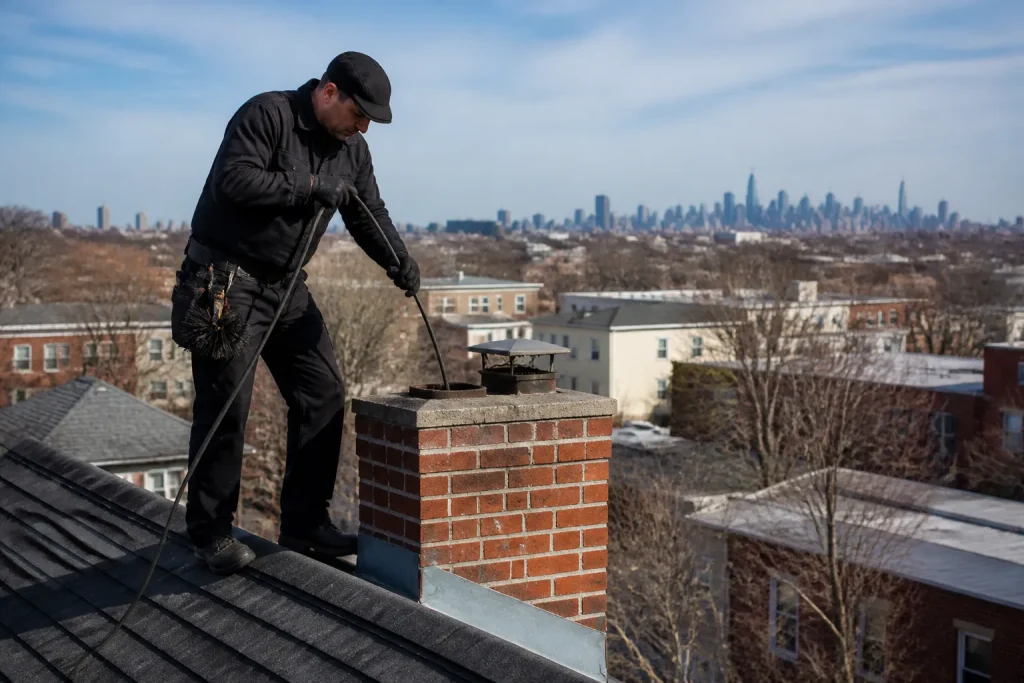
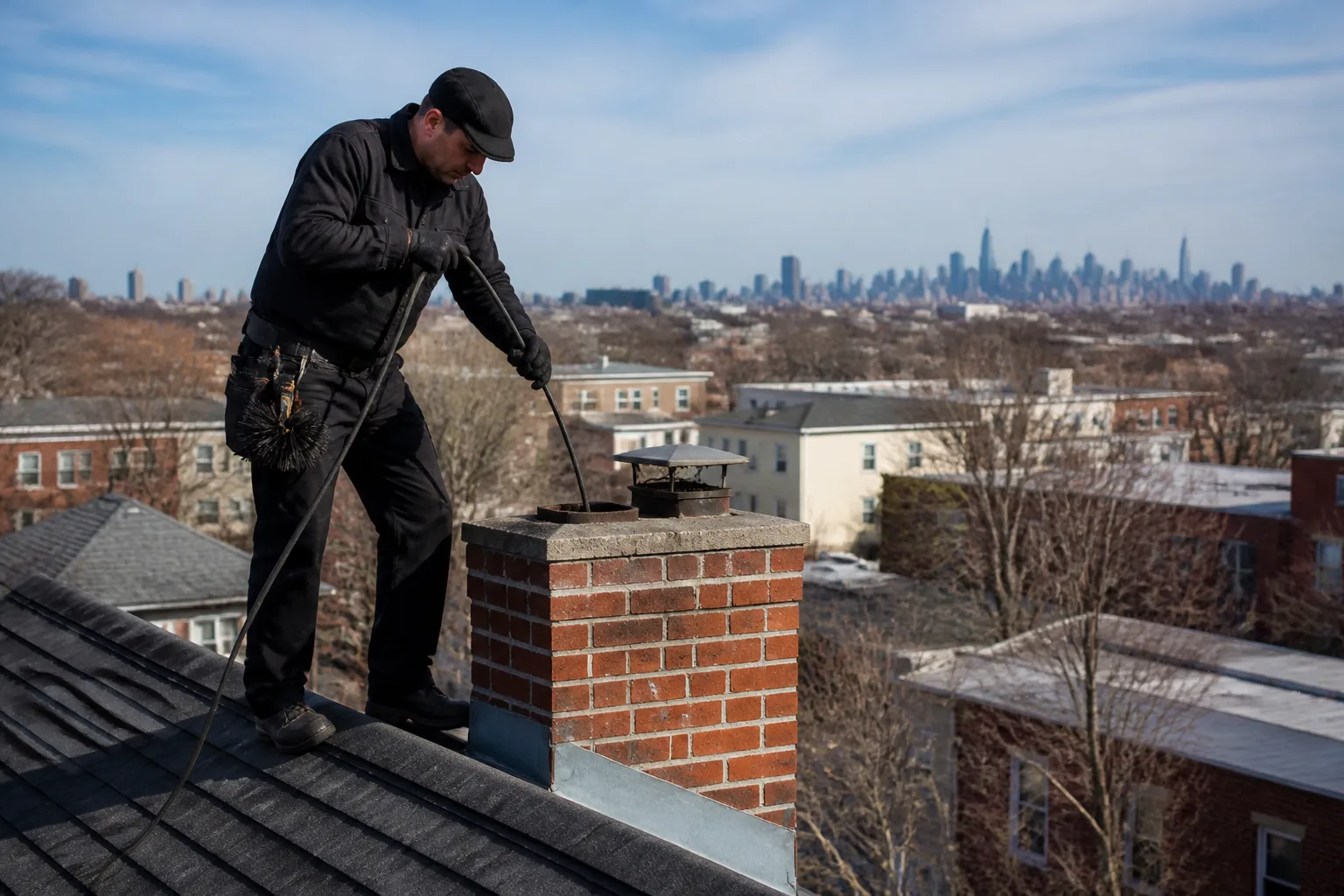
Call a pro for anything above the firebox, and never go on the roof to check a cap or damper yourself. Rooftop and height work on a chimney is genuinely dangerous, and a fall from a low Brooklyn roofline is still a fall. The flue itself carries soot, creosote, and carbon monoxide risk, and a blocked or damaged flue should only be evaluated by a trained technician with the right tools and camera equipment.
Call us when you notice any of these:
- Smoke rolling back into the room instead of up the flue.
- A damper that sticks, won’t close, or no longer seals.
- A cap that’s loose, missing, or visibly rusted through.
- Water staining on the chimney breast or ceiling near the flue.
- Any doubt about when the chimney was last swept.
If you’re in East New York and need help, we’ll inspect the system, name the components involved, and tell you honestly what can wait. Call (855) 337-0826. We answer 24/7. Fast dispatch from 7am to 7pm, Sunday through Friday, and we’re closed Saturday.
Related services in East New York: chimney inspection, chimney cap & crown replacement, and chimney repair.
The Bottom Line
Gelco is one of the professional supply names worth recognizing, and it shows up on your chimney as caps, dampers, and the fittings that make them seal. Knowing the brand won’t make you a chimney technician, but it gives you a concrete question to ask: what are you installing, and why? That question tells you more about a contractor than any brochure. We use the materials certified chimney professionals trust, and we inspect before we recommend. If you’re in East New York and need help, Chimney Sweep East New York offers free estimates. Call (855) 337-0826.
Frequently Asked Questions
No. Gelco manufactures chimney components such as caps, dampers, and specialty parts. A chimney sweep installs and services those components as part of a full chimney job. When you hire a sweep, you’re hiring the installer, not the manufacturer.
Ask for the brand, the gauge, and the size in writing on the quote. Professional-grade caps are heavier steel and sized to your flue, while builder-grade caps are thin and universal-fit. If the contractor can’t name the product, treat that as a warning. Call (855) 337-0826 for an exact quote; estimates are free.
Yes, because freeze-thaw cycles and driven rain punish thin metal. Heavier, properly sized components flex less and last longer, so the cheaper part usually costs more over time through earlier replacement. The written estimate sets the final price either way.
You can look for obvious rust or a missing cap from the ground with binoculars, but don’t climb onto the roof to inspect it. Rooftop and height work is dangerous, and a trained technician has the right tools and camera equipment to see the top of the flue safely. Call (855) 337-0826 to book an inspection.
Written by the team at Chimney Sweep East New York.
Need Chimney Cleaning Help?
Call Chimney Sweep East New York - the local pro we connect you with is licensed and insured, with free written estimates in East New York.
(855) 337-0826